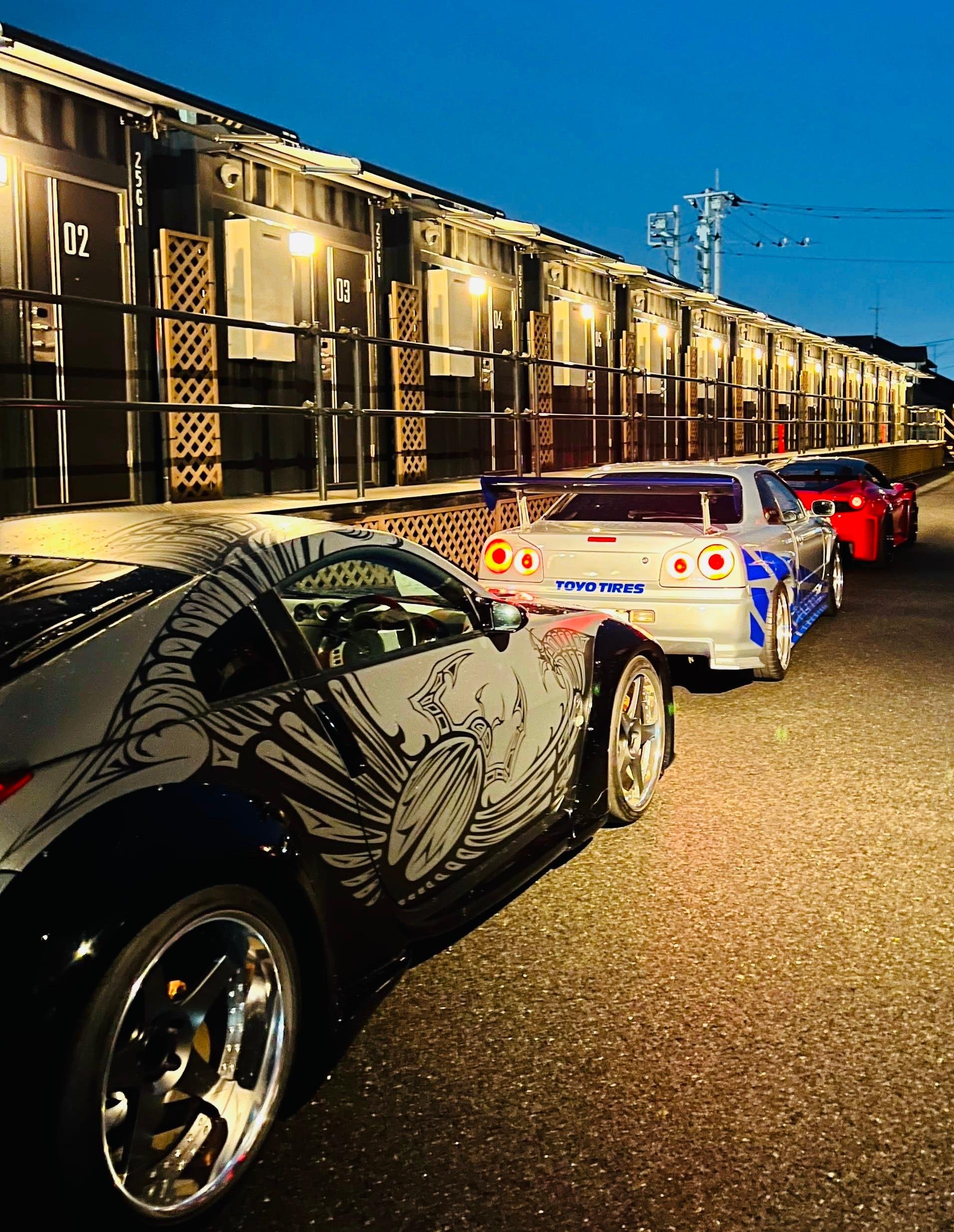
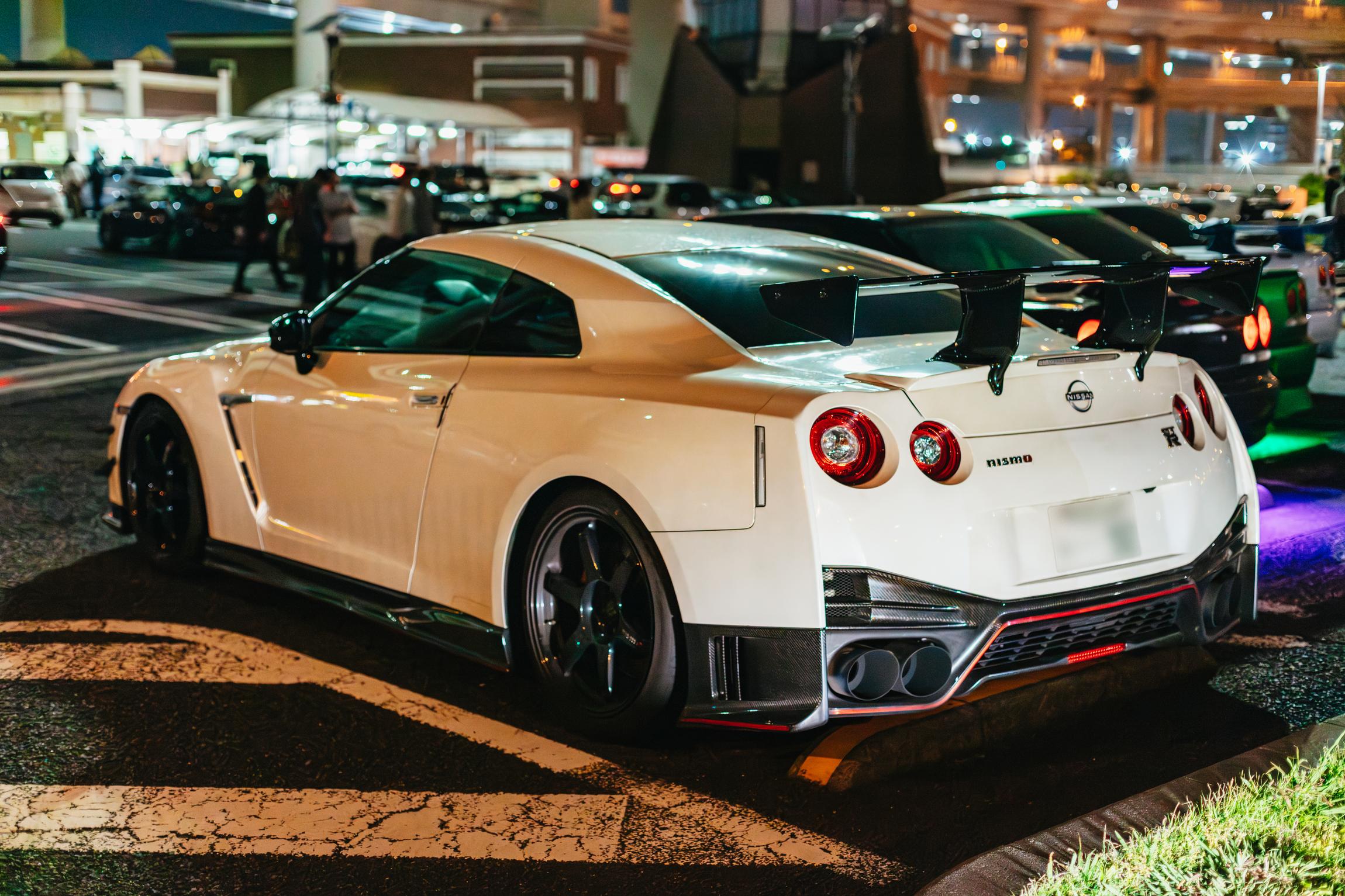
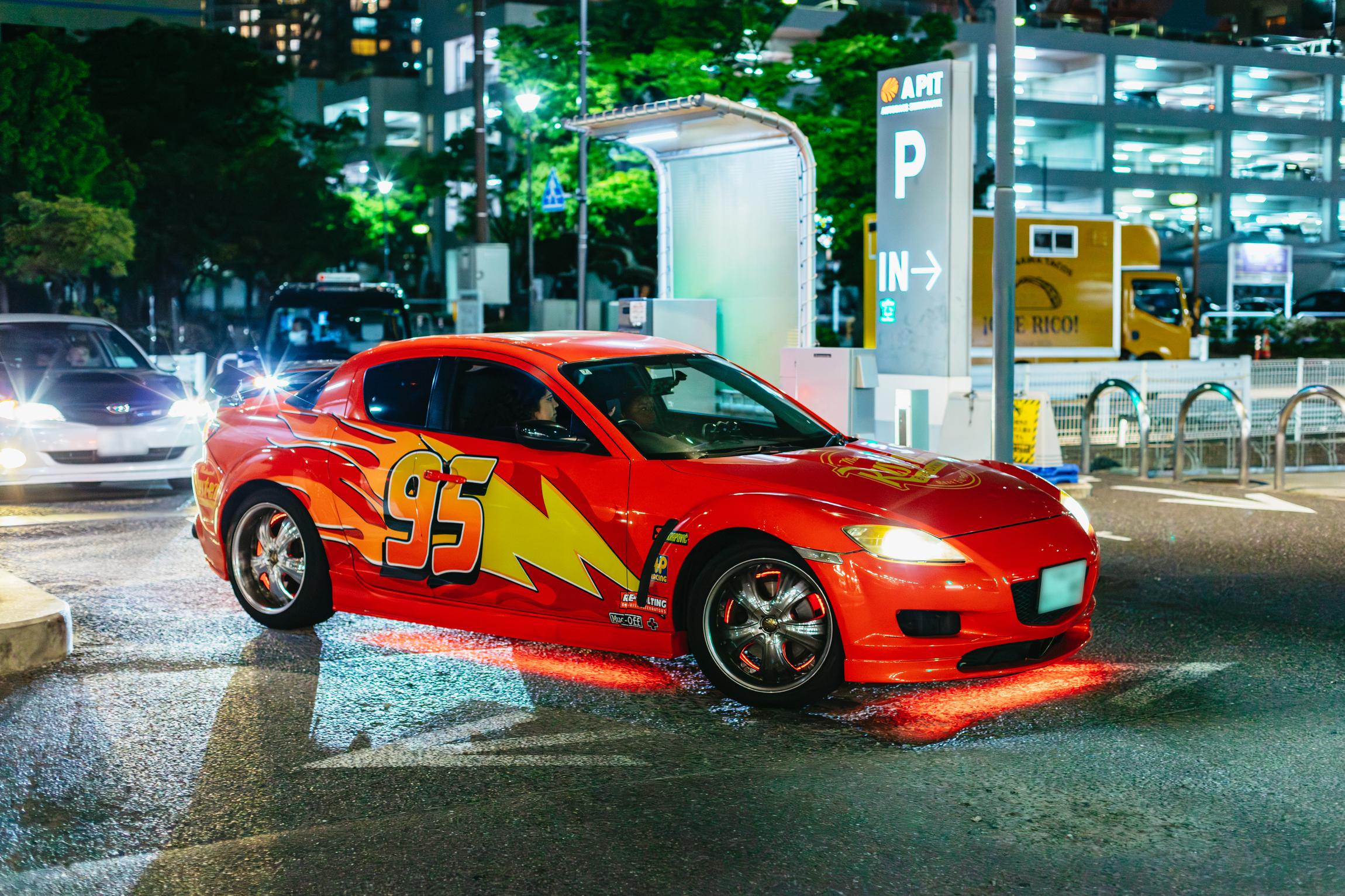
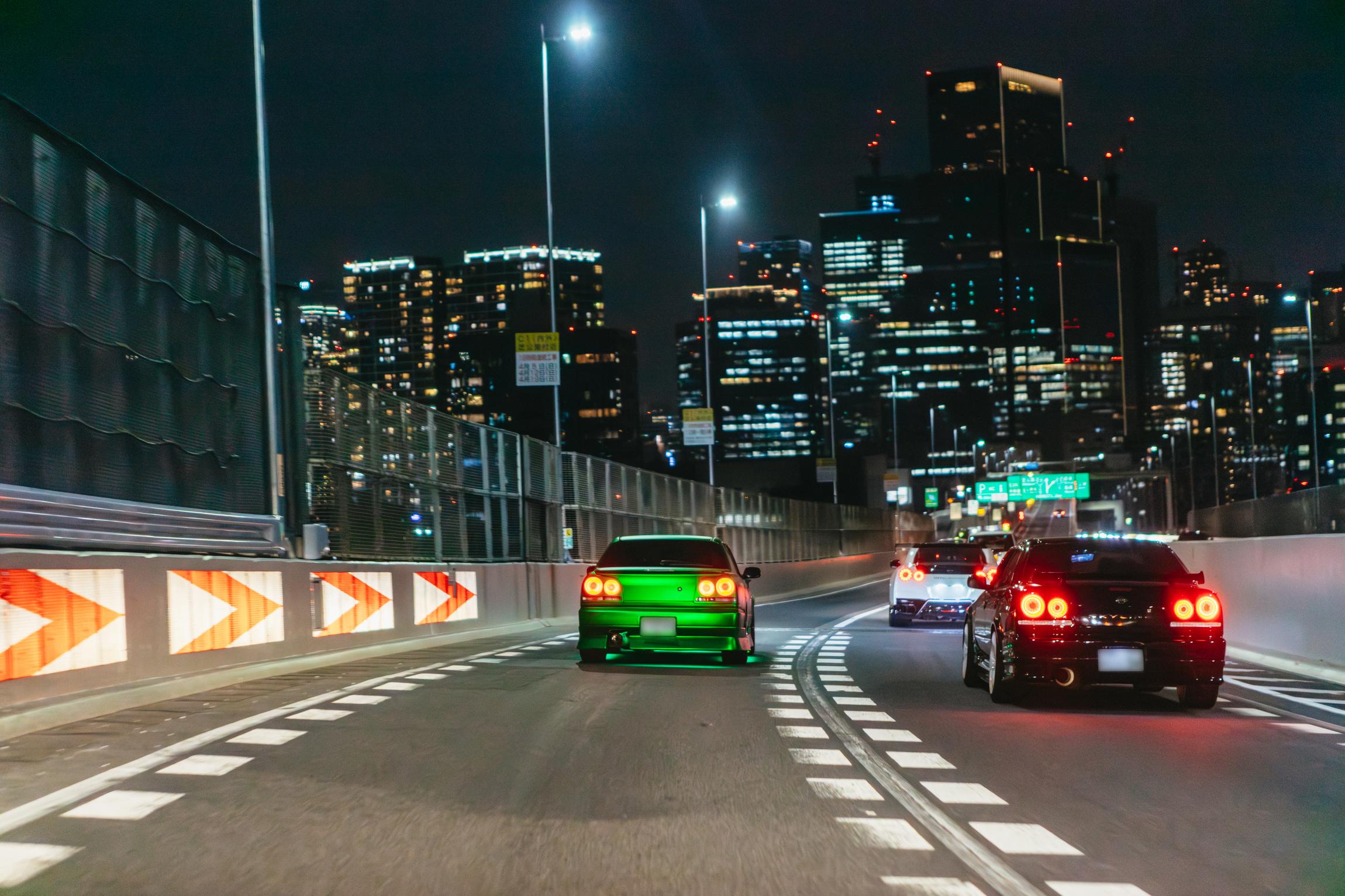
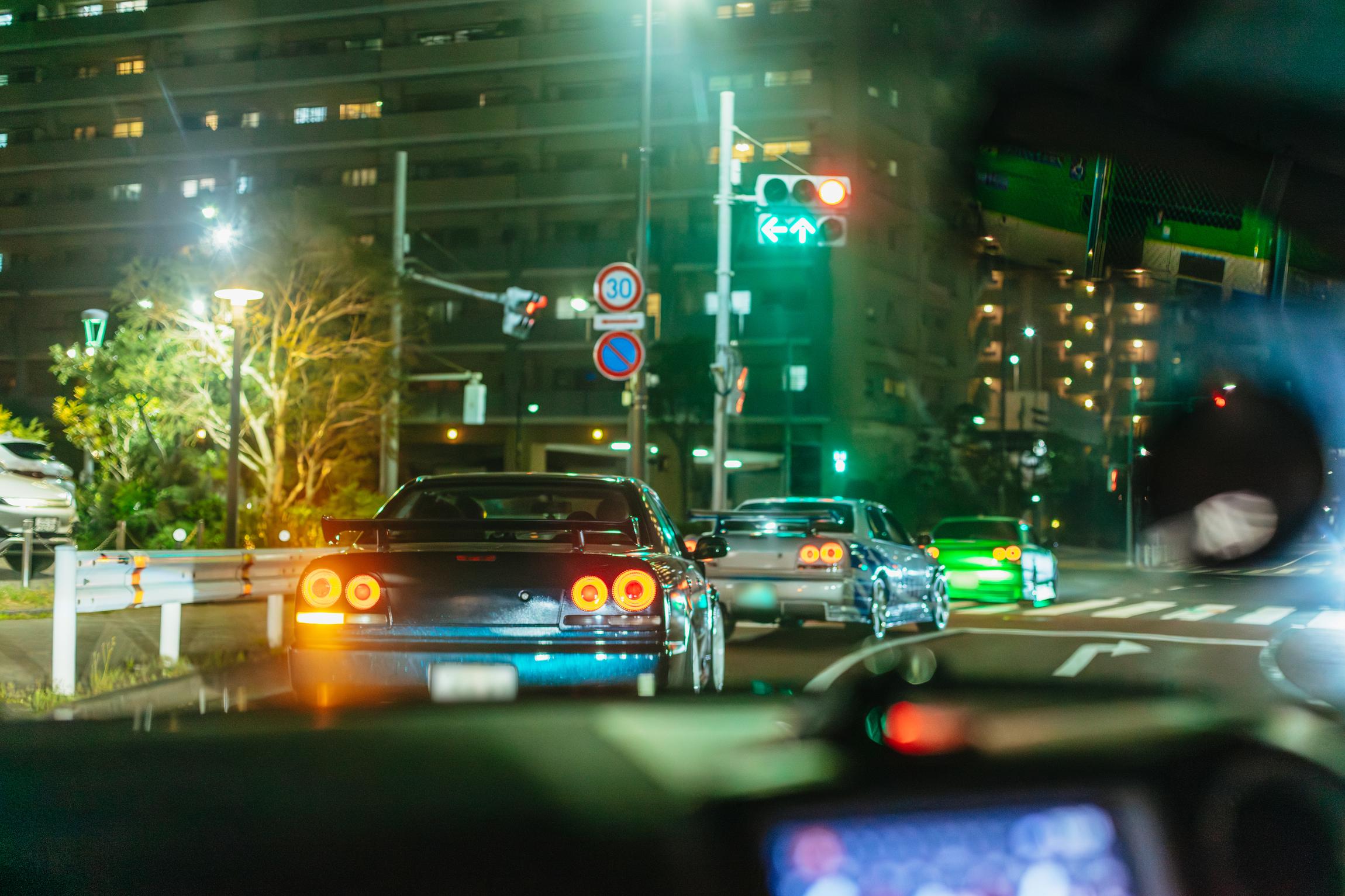
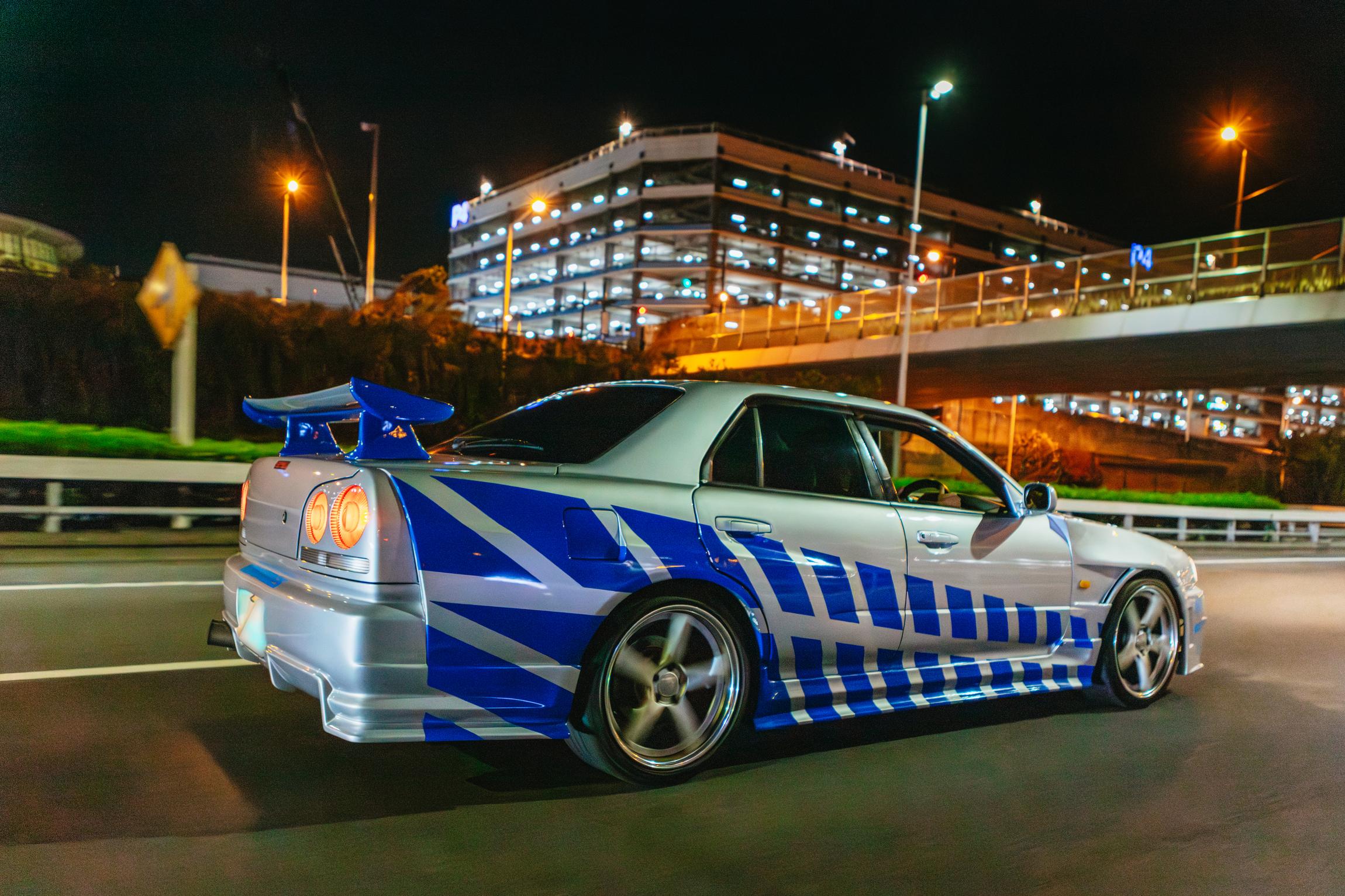
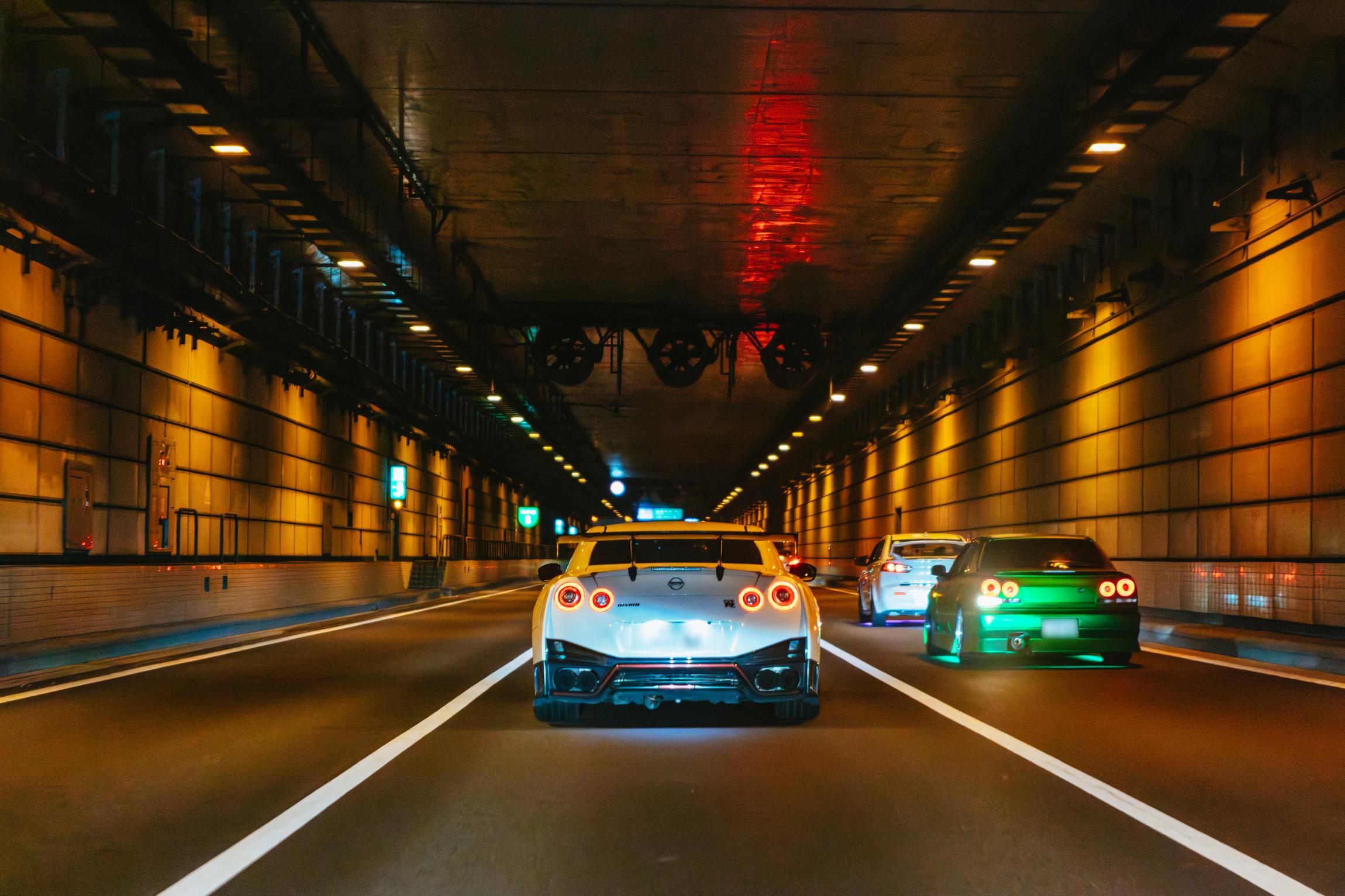
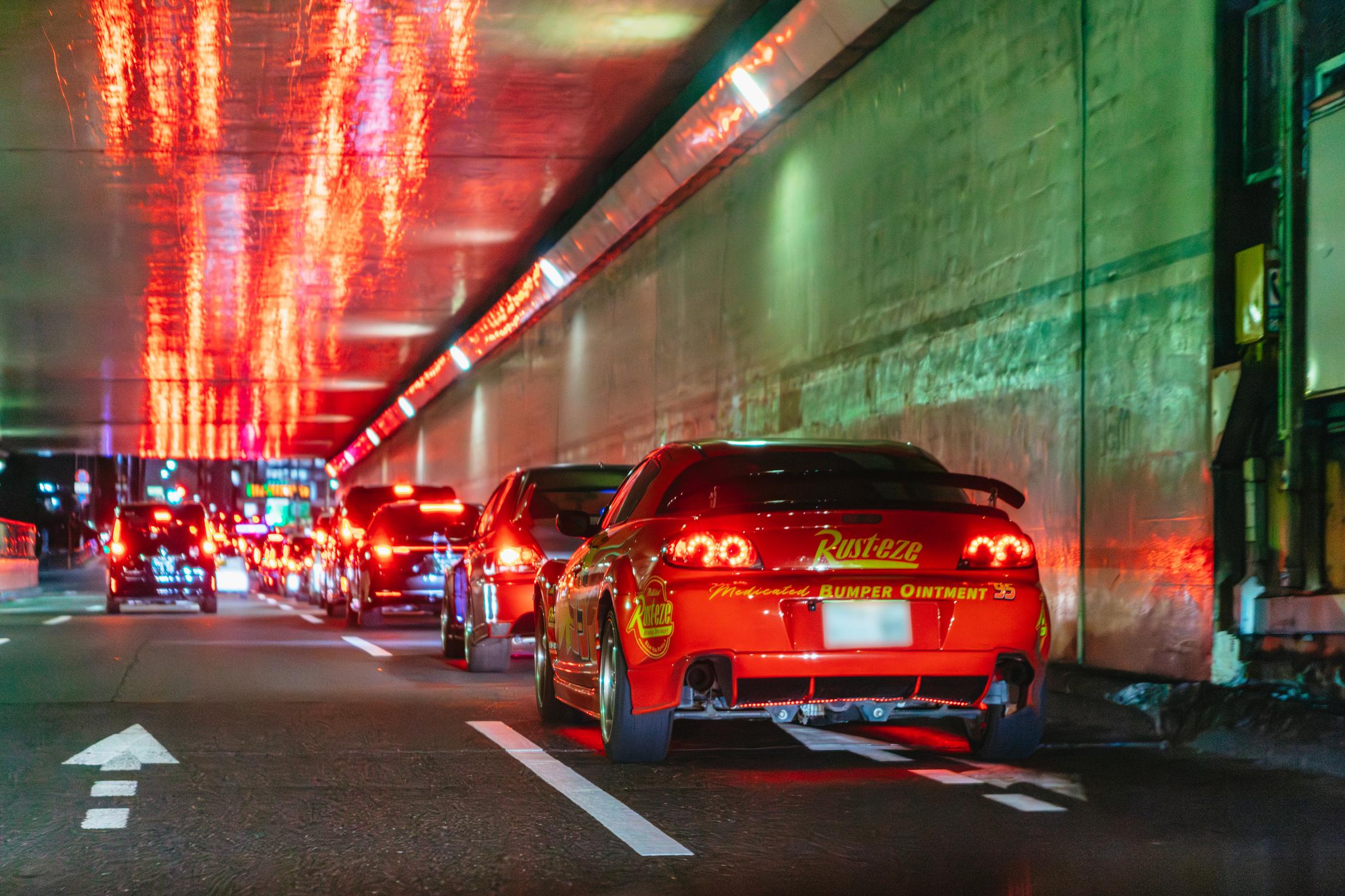
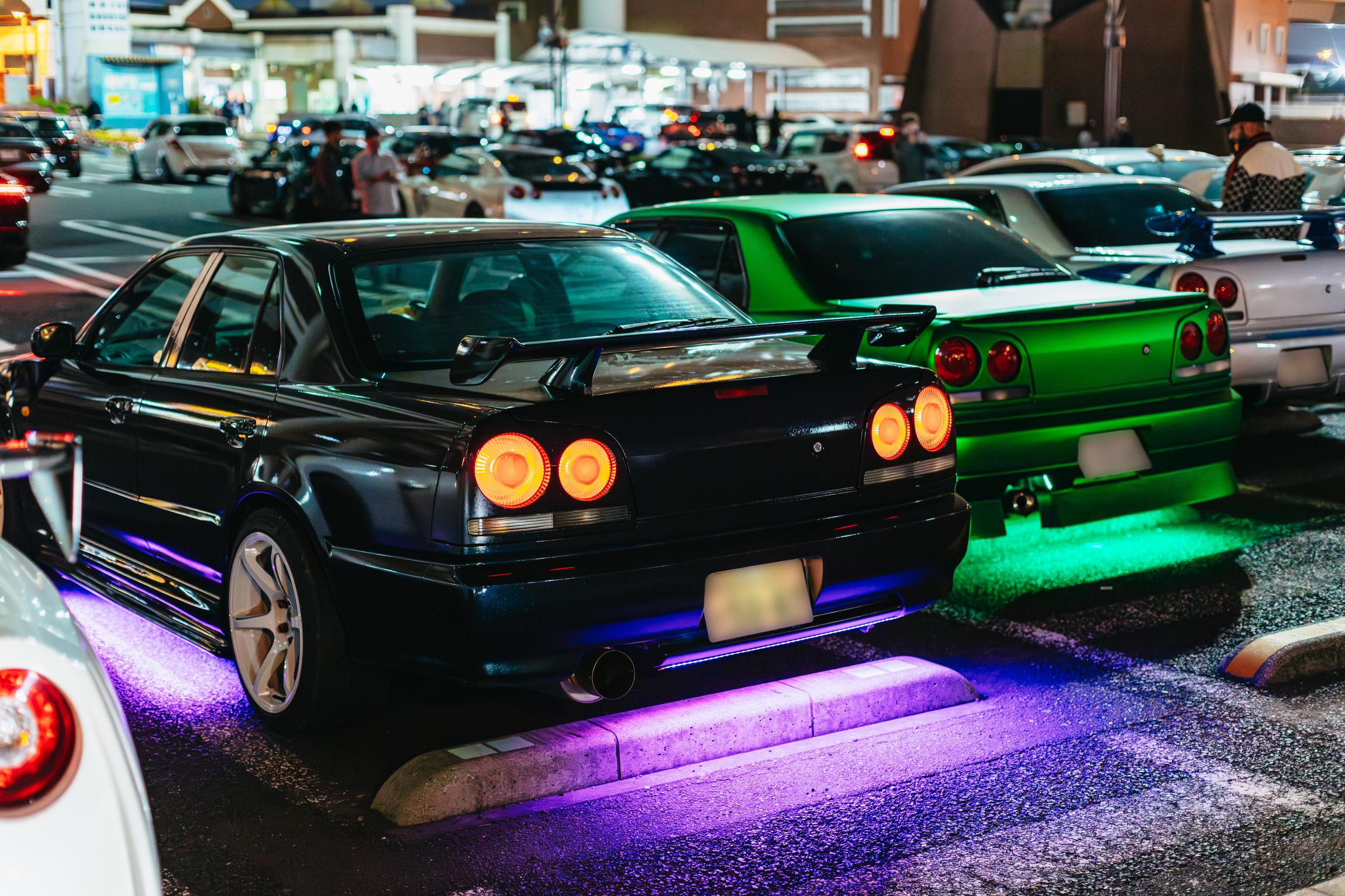
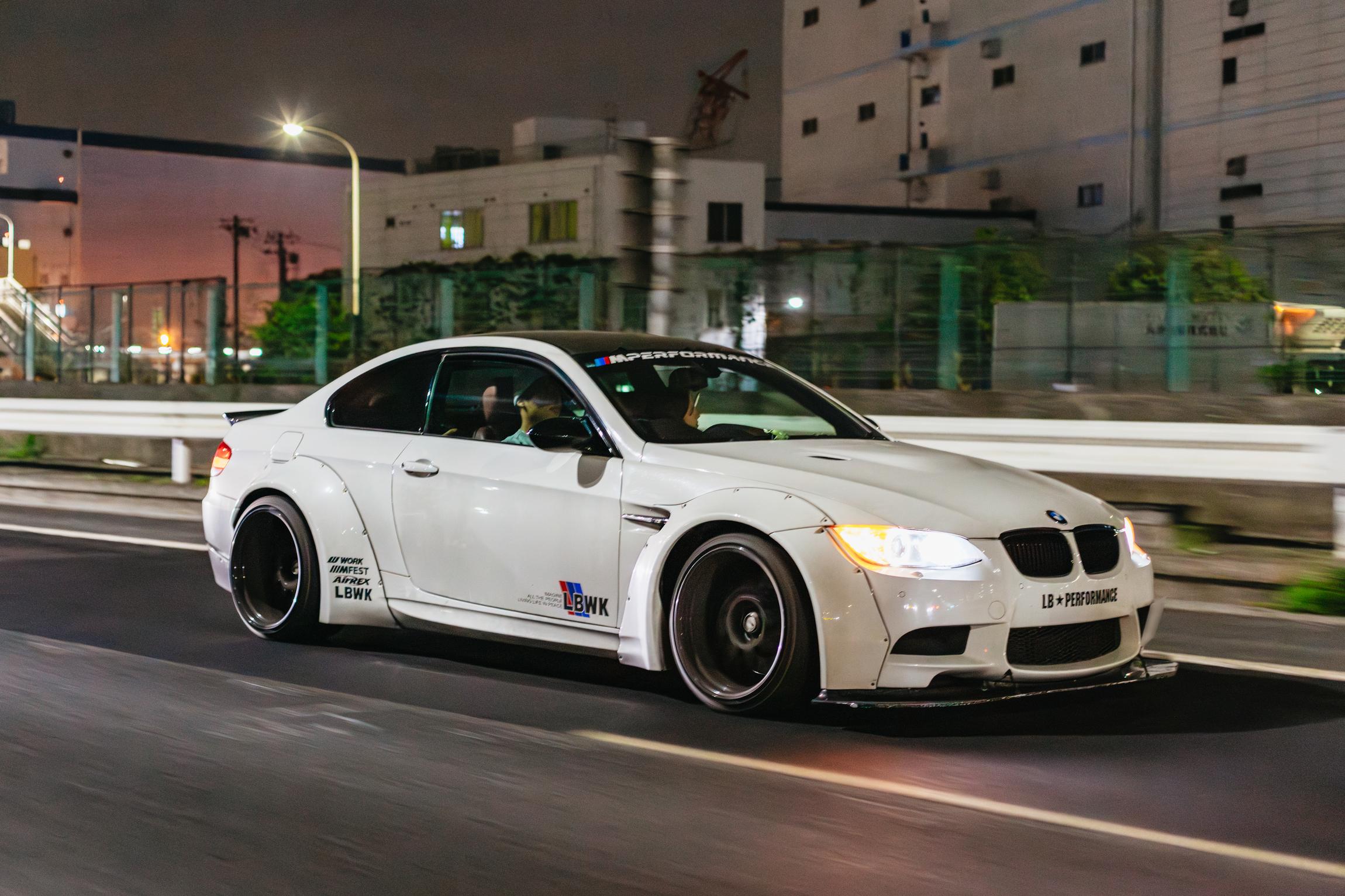
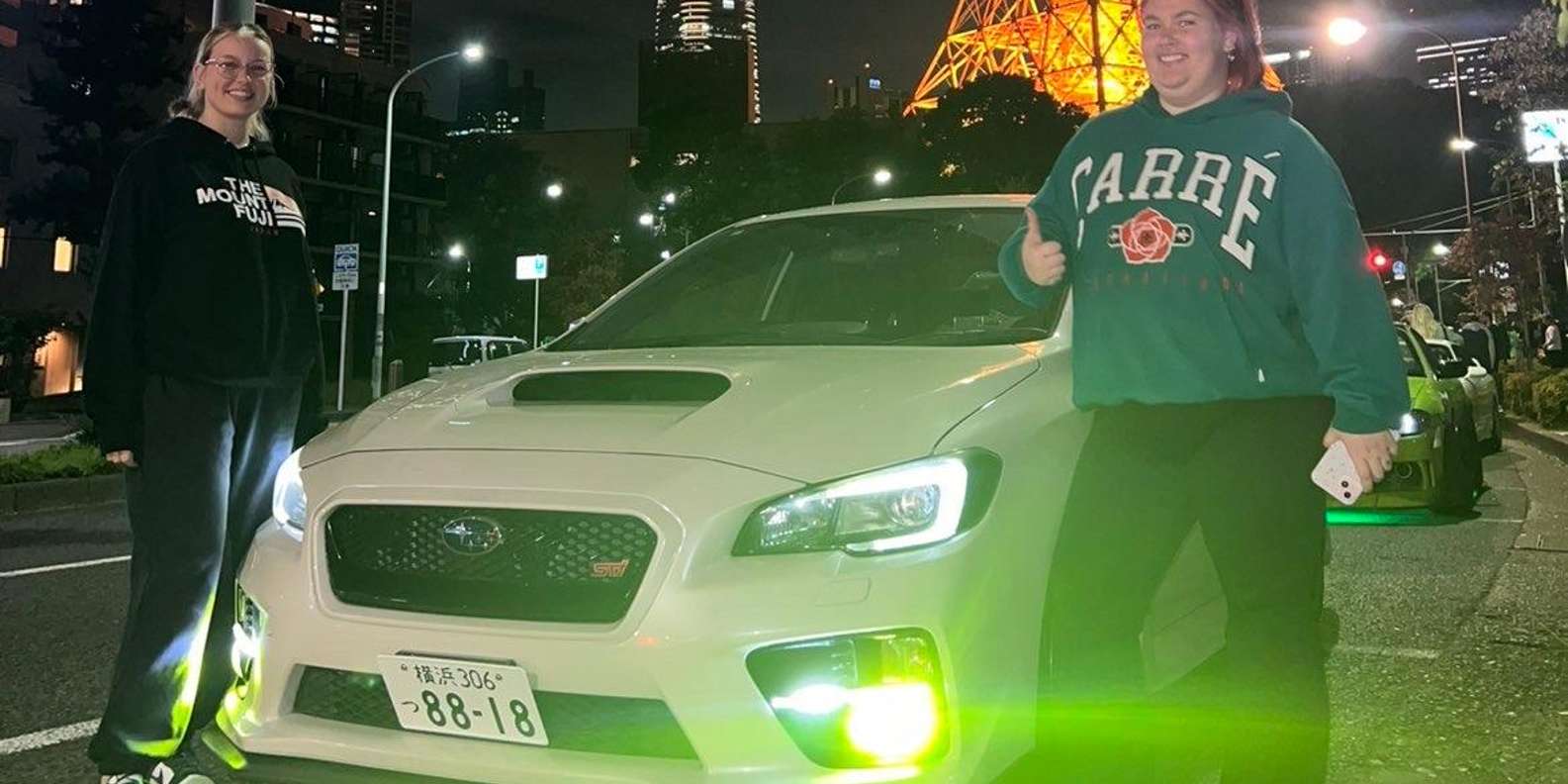
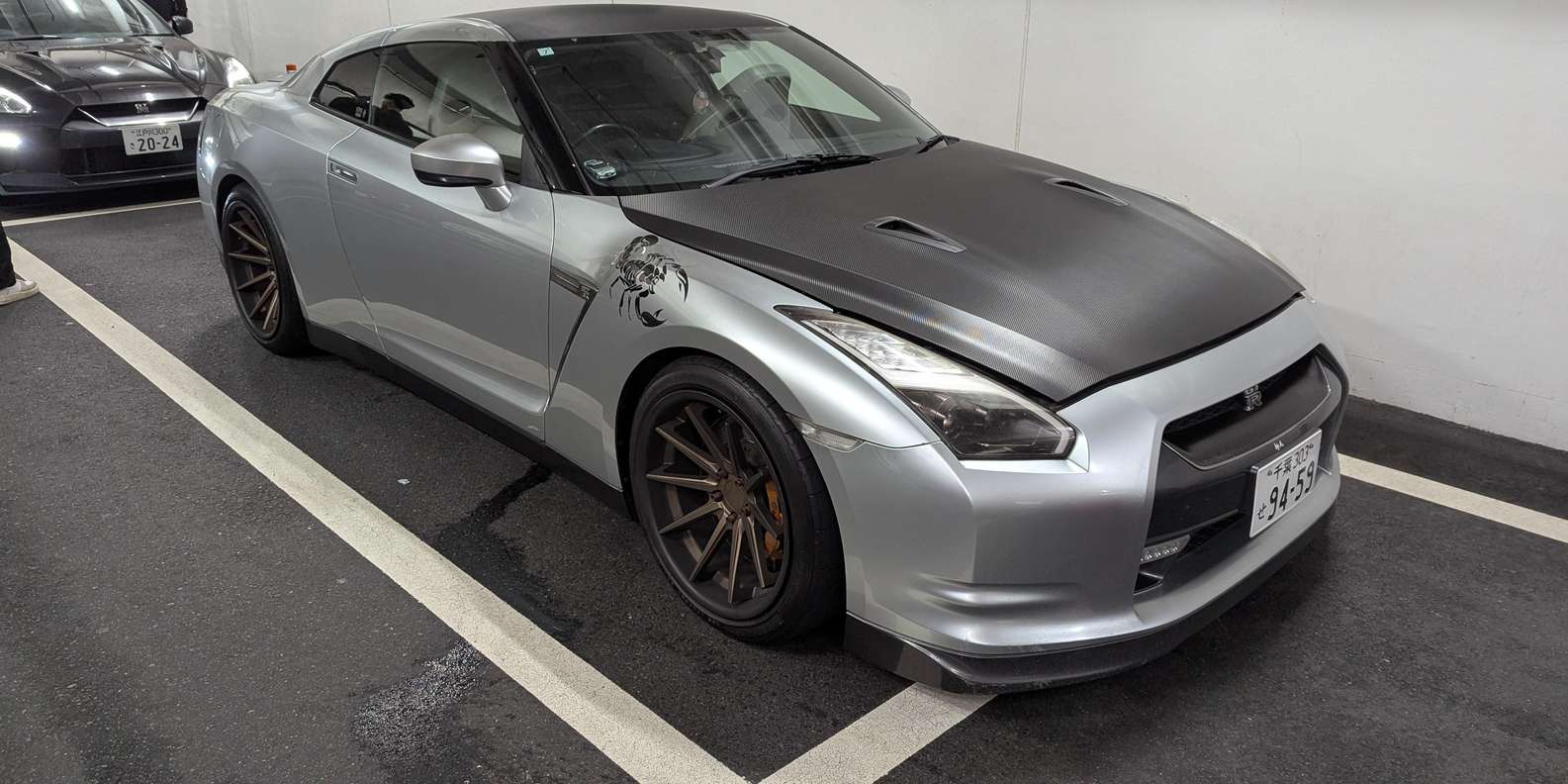
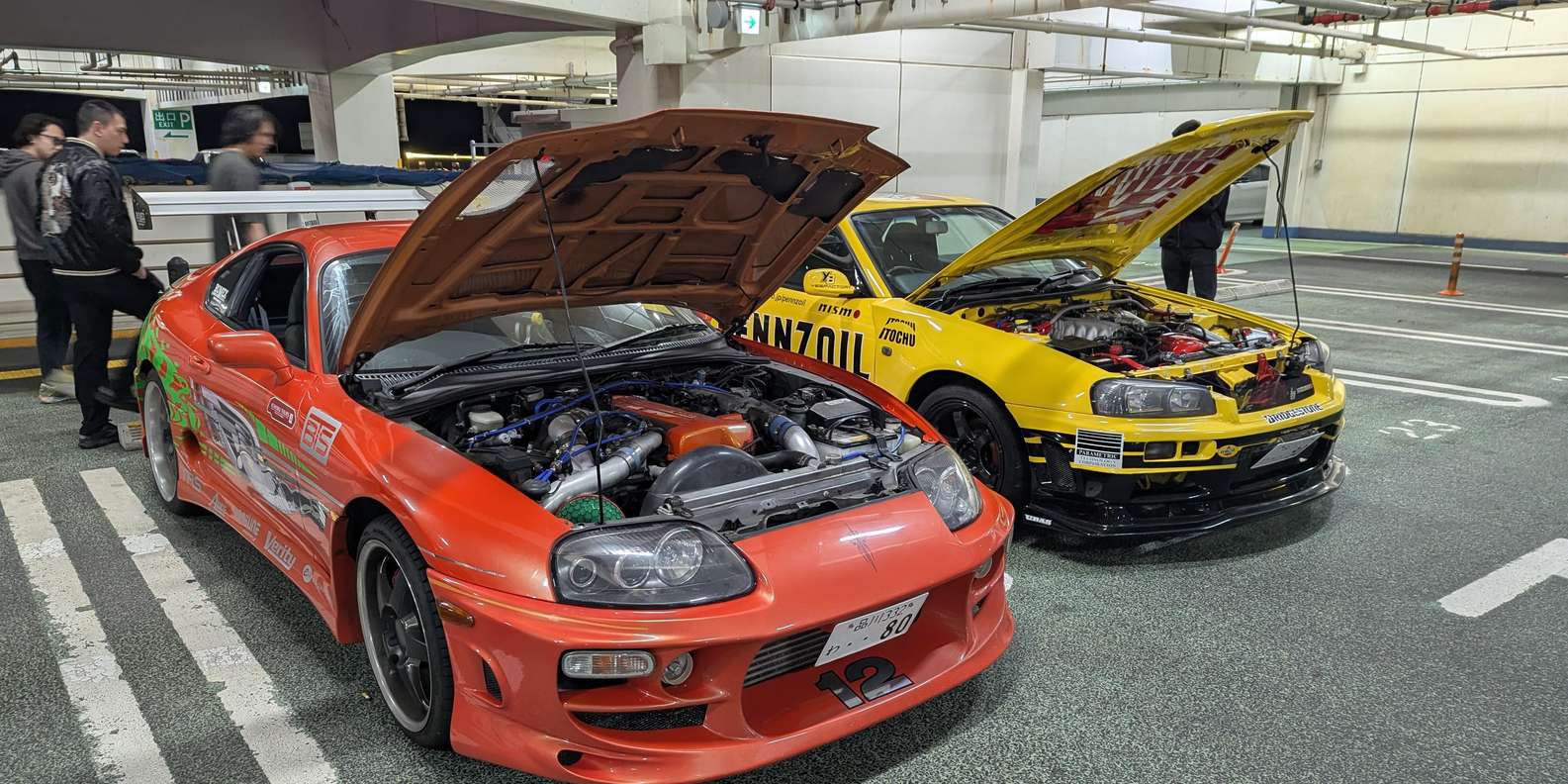
Almost nobody searching jdm tokyo tour wants a tour. They want a specific thing: to be in an R34, a Supra, an RX-7 or a Silvia, on a lit expressway, at night. Every listing knows that and every listing sells the picture. Very few of them tell you which car you will actually be sitting in.
That is the question this page answers, along with the two that follow from it — what the drive really covers, and the difference between riding in one of these cars and being allowed to drive it.
Which chassis actually exist in Tokyo’s tour fleets
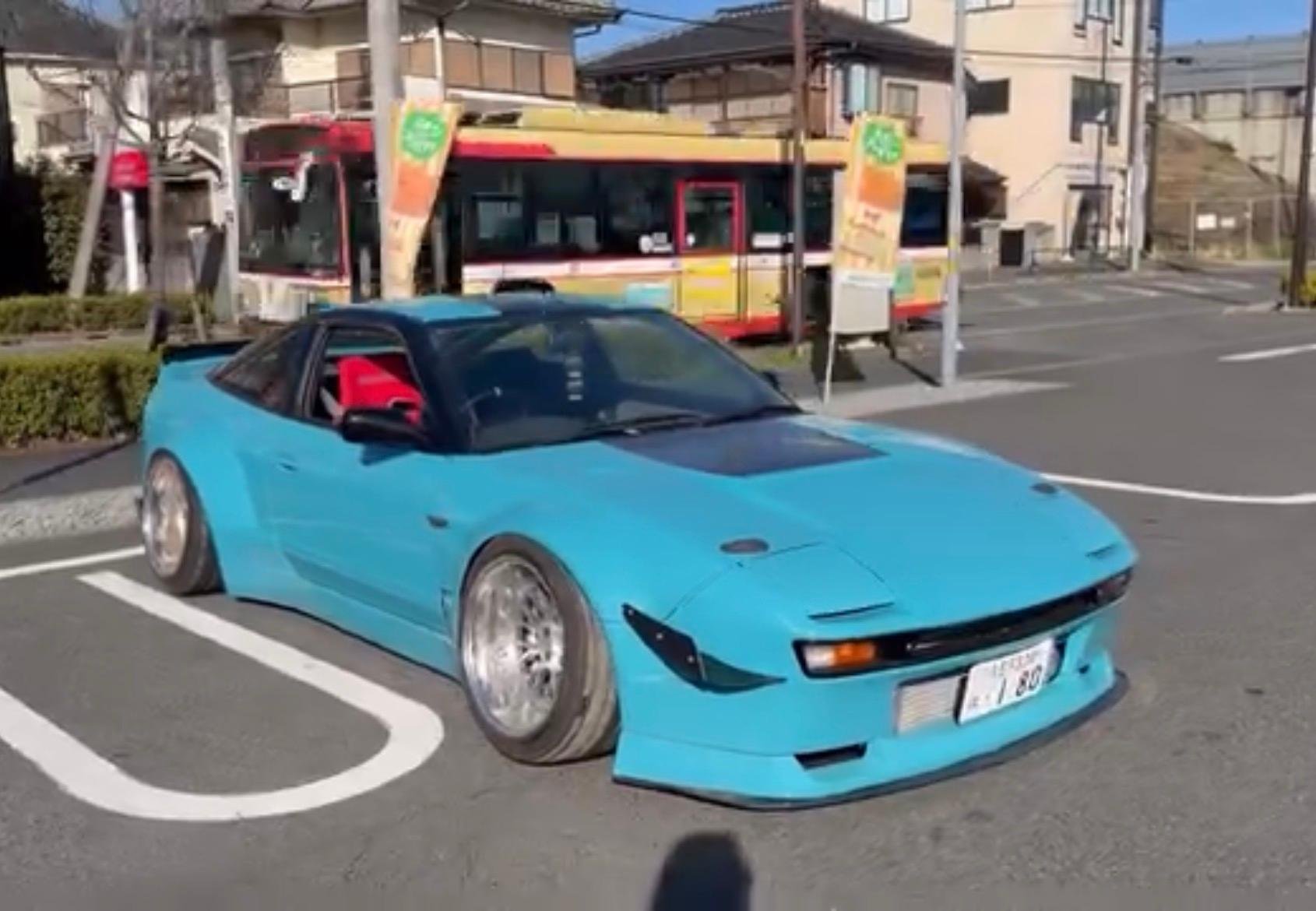
There is no official canon of JDM cars, but the operators vote with their capital. Across the 27 Tokyo products in our dataset, here is how often each chassis is named in a listing’s own title, description or fleet details:
The Toyota Chaser JZX100 and the GT86 turn up as well. If a chassis is not on that list, you will be hunting for it — and the fewer listings that name a car, the more you should expect to pay for a guaranteed seat in one.
Check JDM tour dates
Three business models, three different evenings
This is the distinction that decides your night, and no comparison site makes it.
The fleet operator. The most-reviewed product in Tokyo runs a company fleet its own listing puts at around forty sports cars — Skylines, Evos, GT-Rs, Silvias, plus a few outliers like a Camaro and some BMWs. Three passengers per car, ten to fifty cars out on any given night. The scale is why it has 5,040 verified reviews, more than five times deeper than anything else in our data, and the scale is also why its listing asks you not to request a specific car: availability depends on your date and which drivers are working. That is an honest trade, clearly stated.
The owner-driver collective. A different operator opens its description with a direct swipe at the model above: we don’t use company fleet cars. Every member of our team drives their own carefully built machine. You are told the pool — R34, R33, widebody S15 Silvia, JZA80 Supra, JZX100 Chaser, R35 GT-R — rather than promised one car, and on the standard plan you may share the ride. It carries 5.0 from 338 reviews, and the reviews name the driver and their specific car more often than they name the route.
Licensed private hire. At the top, a garage of R34 Skylines run as a professional chauffeur service, priced per group rather than per person. Four people at $379 is $95 each, which is cheaper per head than several of the shared seats above it. Here the car is contractual: it is what you booked. The same listing is unusually frank about the cost of that — the car is around twenty-five years old, and the operator states that an unexpected breakdown is not refundable or reschedulable.
Compare the three models
Fast & Furious: what the film actually was
Most of this market exists because of one film, so it is worth being accurate about it.
The Fast and the Furious: Tokyo Drift (2006) is the third film in the series and its lowest-grossing entry — roughly $159 million worldwide against an $85 million budget. It was made without the franchise’s leads; Vin Diesel appears only in the closing scene, and he negotiated that cameo not for a fee but for the rights to his Riddick character. The film’s reputation has climbed steadily since, and it is now widely regarded as one of the best in the series.
Two things people consistently get wrong. First, most of it was not shot in Tokyo. Universal built sets and leaned hard on visual effects — the production ran hundreds of effects shots, and the famous Shibuya Crossing sequence was assembled with VFX rather than filmed as it appears. Real Tokyo locations do appear: Takeshita Street in Harajuku, Kabukichō in Shinjuku, and a rooftop pitch above Shibuya.
Second, the guerrilla-filming story is true. Faced with a permit process he judged unworkable, director Justin Lin shot in Shibuya without permission and hired a stand-in to claim to be the director if the police arrived. They did. The stand-in was detained, and the footage stayed in the film.
None of which means a tour will re-create the film. Street drifting is illegal in Japan, no operator on this page advertises it, and one listing goes as far as explicitly excluding illegal street drifting from what it provides. What you actually get is the geography the film borrowed. The Tokyo Drift page covers which products lean into it and what they really deliver.
Ride-along or self-drive — and the licence rule people get wrong
Every product on this page is a ride-along: you are a passenger, no licence, no paperwork, no age floor on the driving side. Self-drive is a separate and much smaller category, priced per group at roughly $439–$502, and it comes with real gates.
If you are going to drive in Japan, get this right, because it is the single most expensive thing to discover at a rental counter:
- Japan recognises International Driving Permits issued under the 1949 Geneva Convention, and no others. JAF states plainly that permits issued under other treaties, including the 1968 Vienna Convention, are not valid here.
- Exactly six countries use a certified Japanese translation instead of an IDP: Switzerland, Germany, France, Belgium, Monaco and Taiwan. That is JAF’s current list, consistent across its English pages and its official PDFs, most recently the April 2026 edition.
- Slovenia and Italy are not on it. Slovenia was on the list historically and has been removed, which is exactly why older guides — and at least one operator’s own booking conditions — still print seven or eight countries. If you hold a Slovenian, Italian or Estonian licence, do not rely on a blog post: assume you need a Geneva 1949 IDP and confirm with JAF before you pay.
- Validity runs one year from the date you enter Japan, not from the date the permit was issued.
- Originals only. Photocopies, phone photos and PDFs are refused, and every self-drive operator in our wider dataset states that a driver who cannot produce the physical documents is turned away on the day with no refund.
The self-drive products are also not free rentals. All three in our wider set are convoy formats: a lead car sets the route, you follow, no deviation is permitted, revving is prohibited and the engine is not to be taken into the red zone. Our sister site tokyojdm.tours sets out the self-drive paperwork in full, including the age floors and the credit-card excess.
The road itself, which is half the product
The route is almost identical across the fleet and it is genuinely good:
- The Rainbow Bridge, crossed rather than photographed from a viewing deck, with Tokyo Bay and Odaiba on the glass.
- The Wangan and C1 expressways — the Bayshore route and the central loop, the roads Wangan Midnight is about, taken at legal speeds through lit tunnels.
- A-PIT Autobacs Shinonome, the largest car-supply shop in the area, which is a car meet in its own right on a good night.
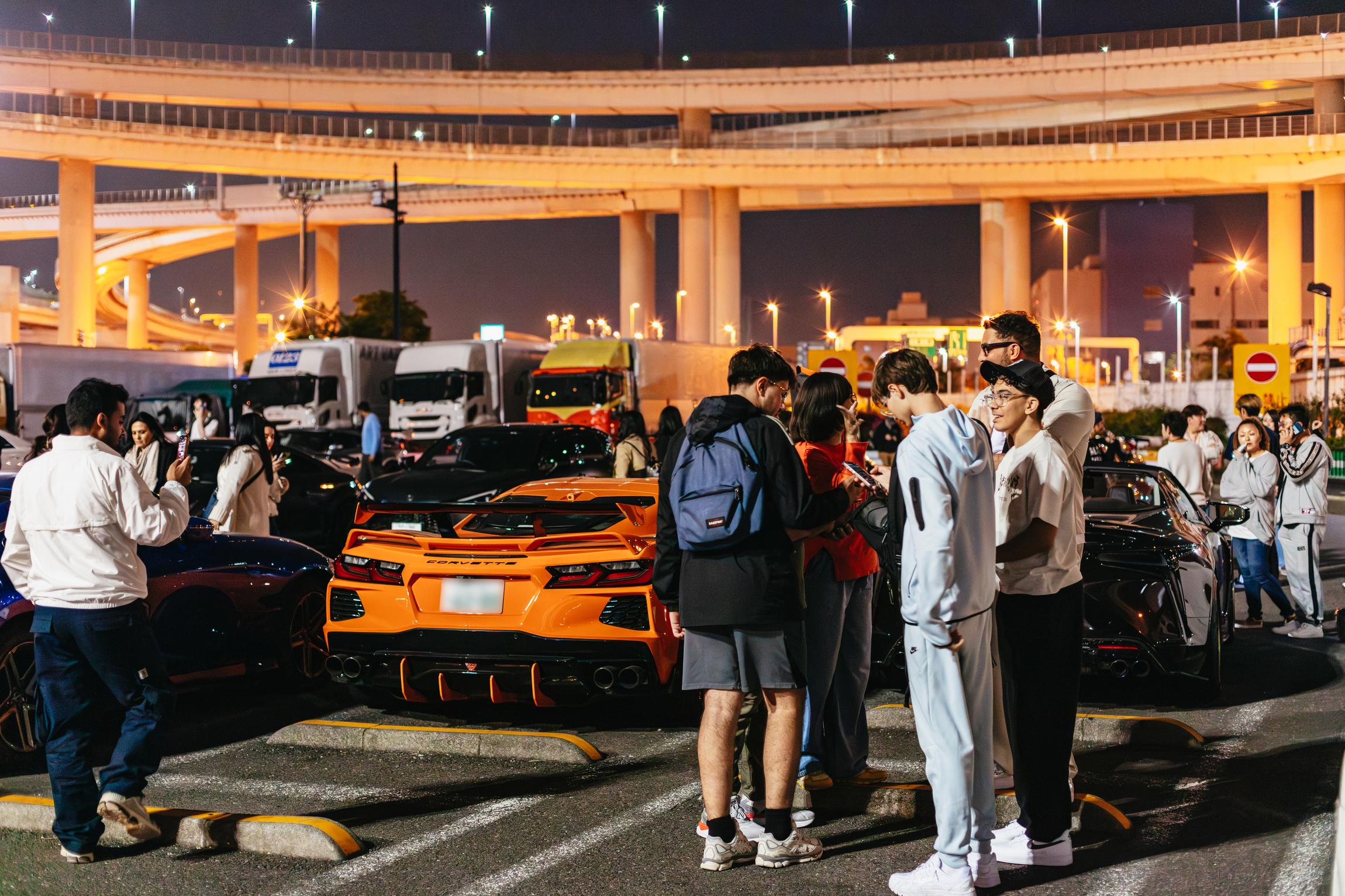
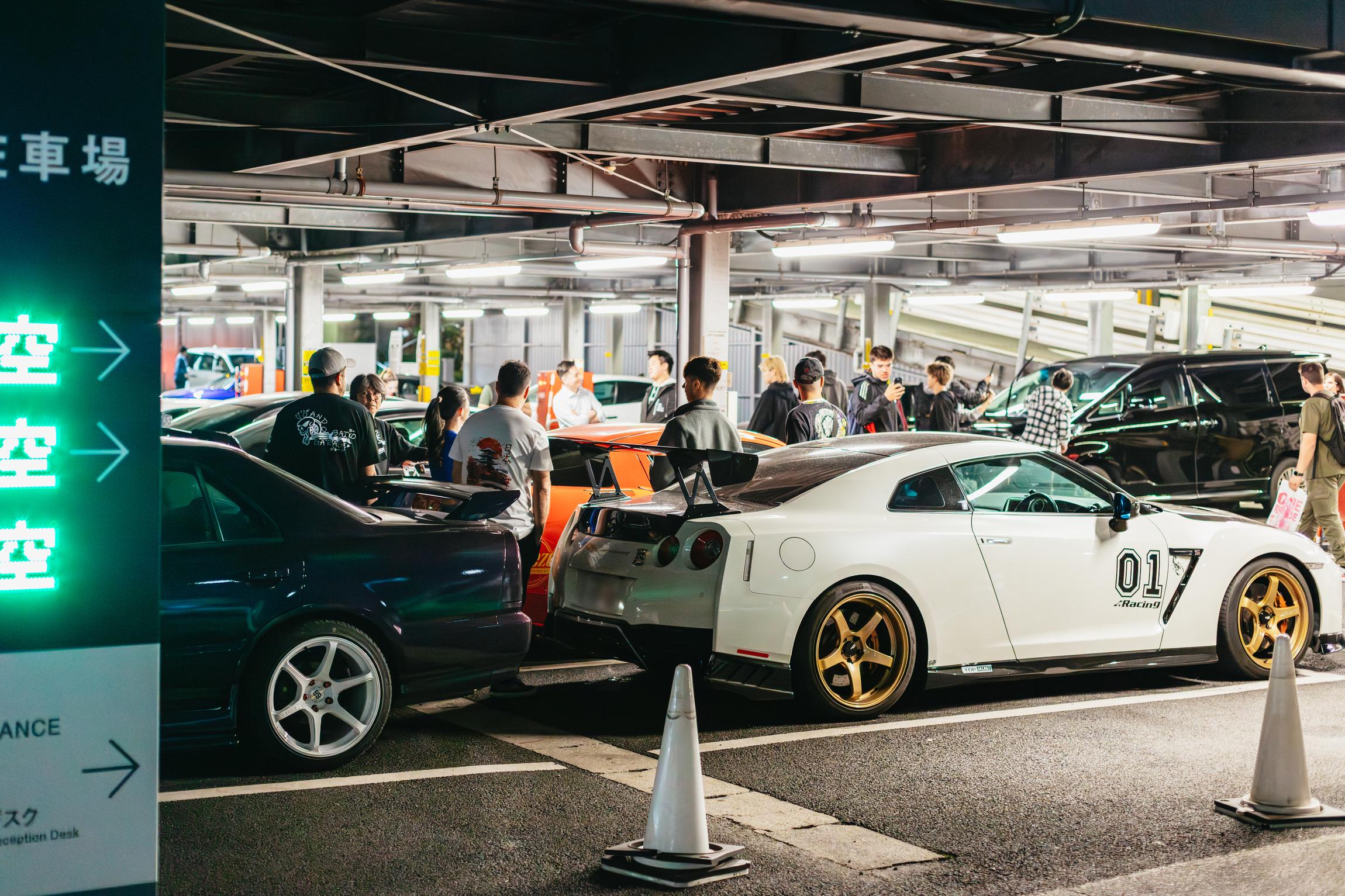
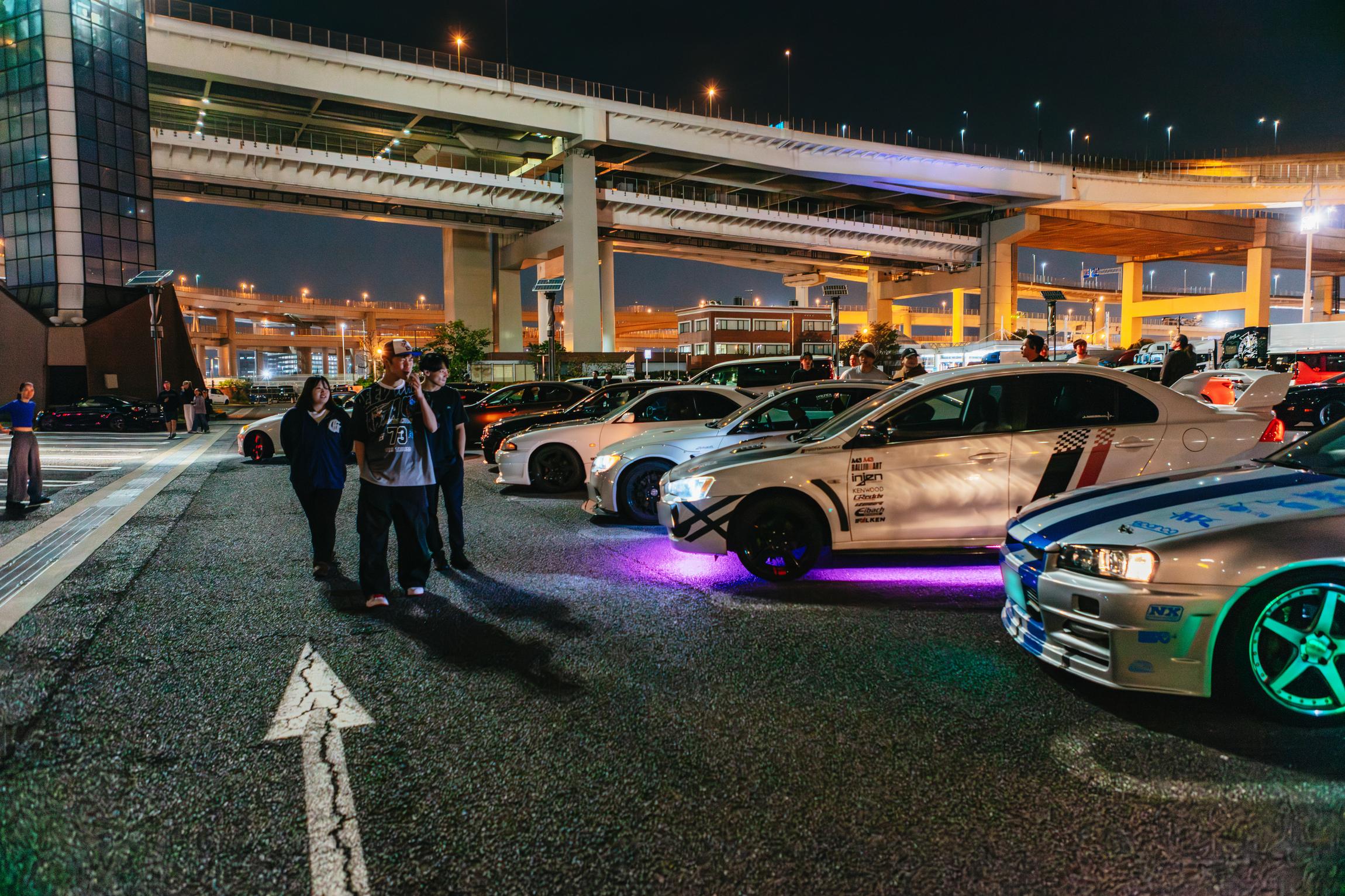
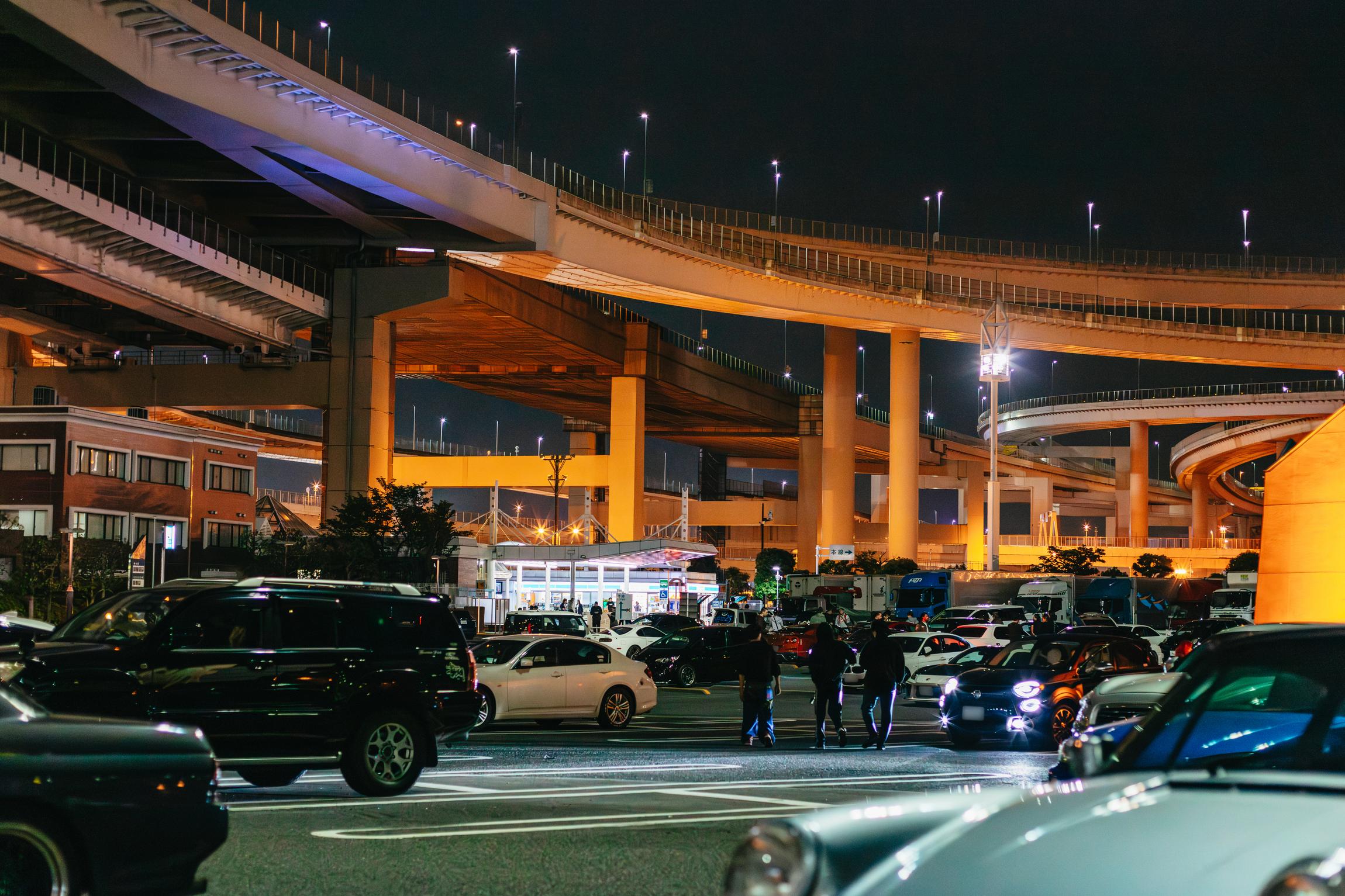
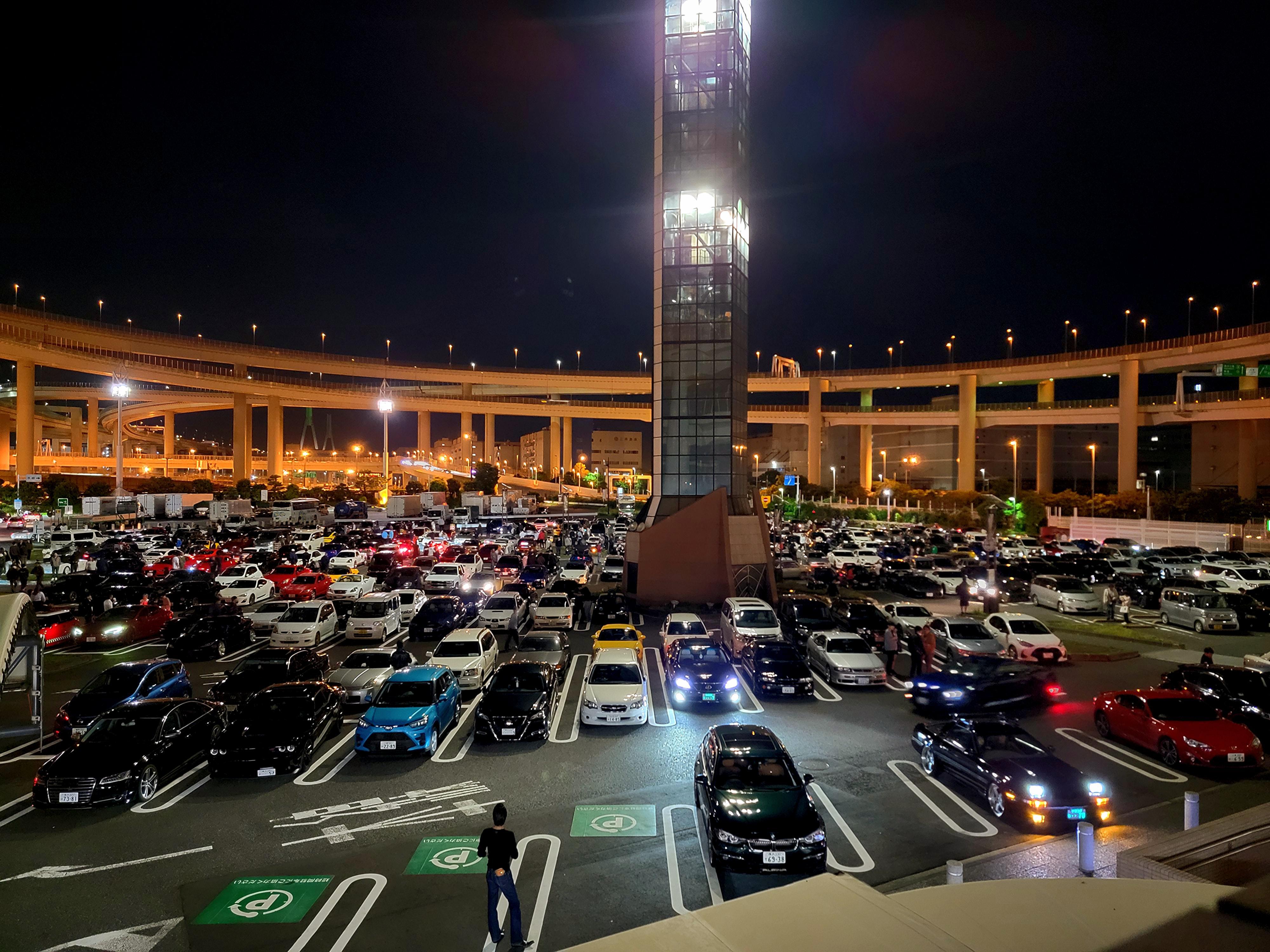
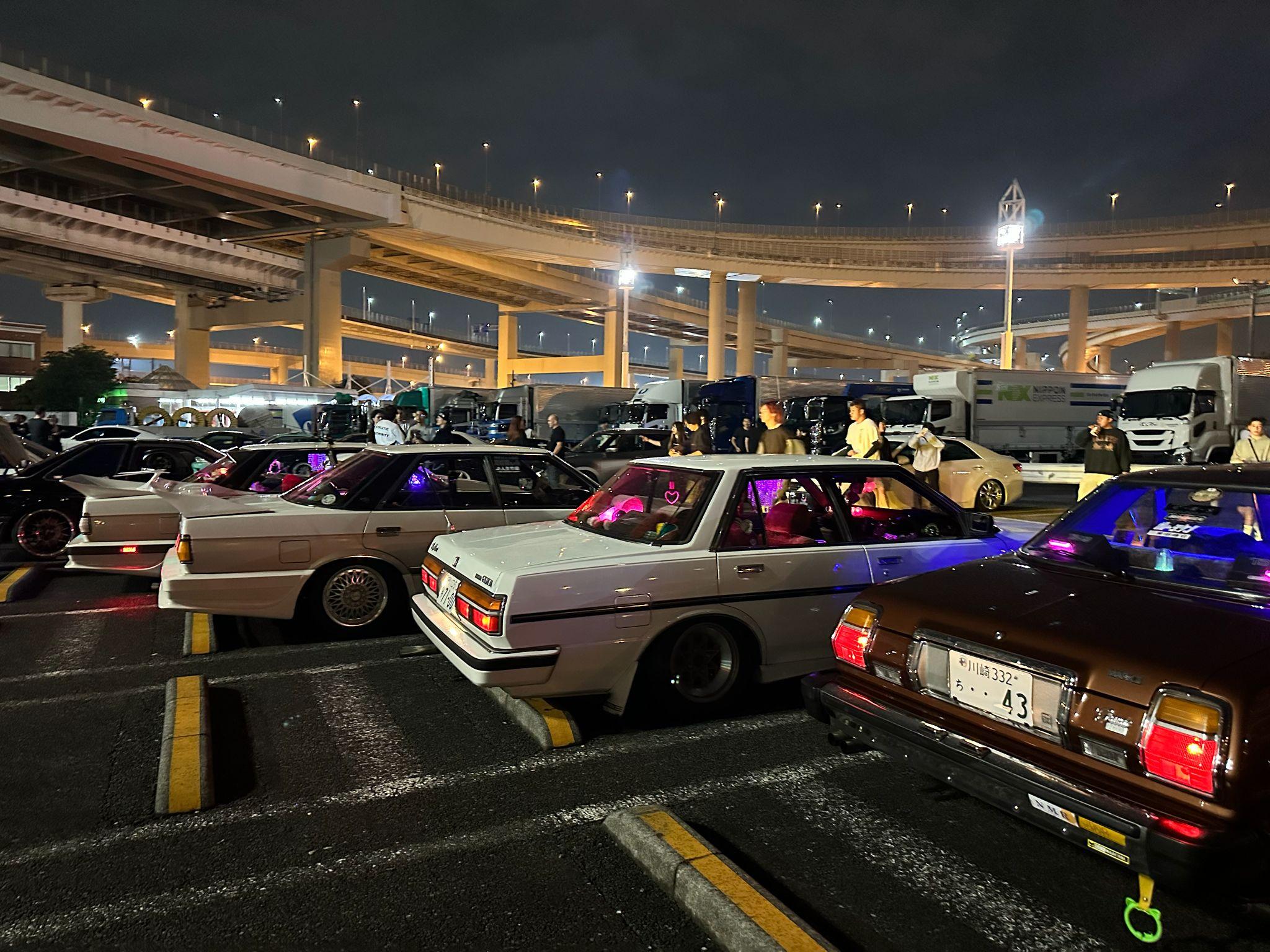
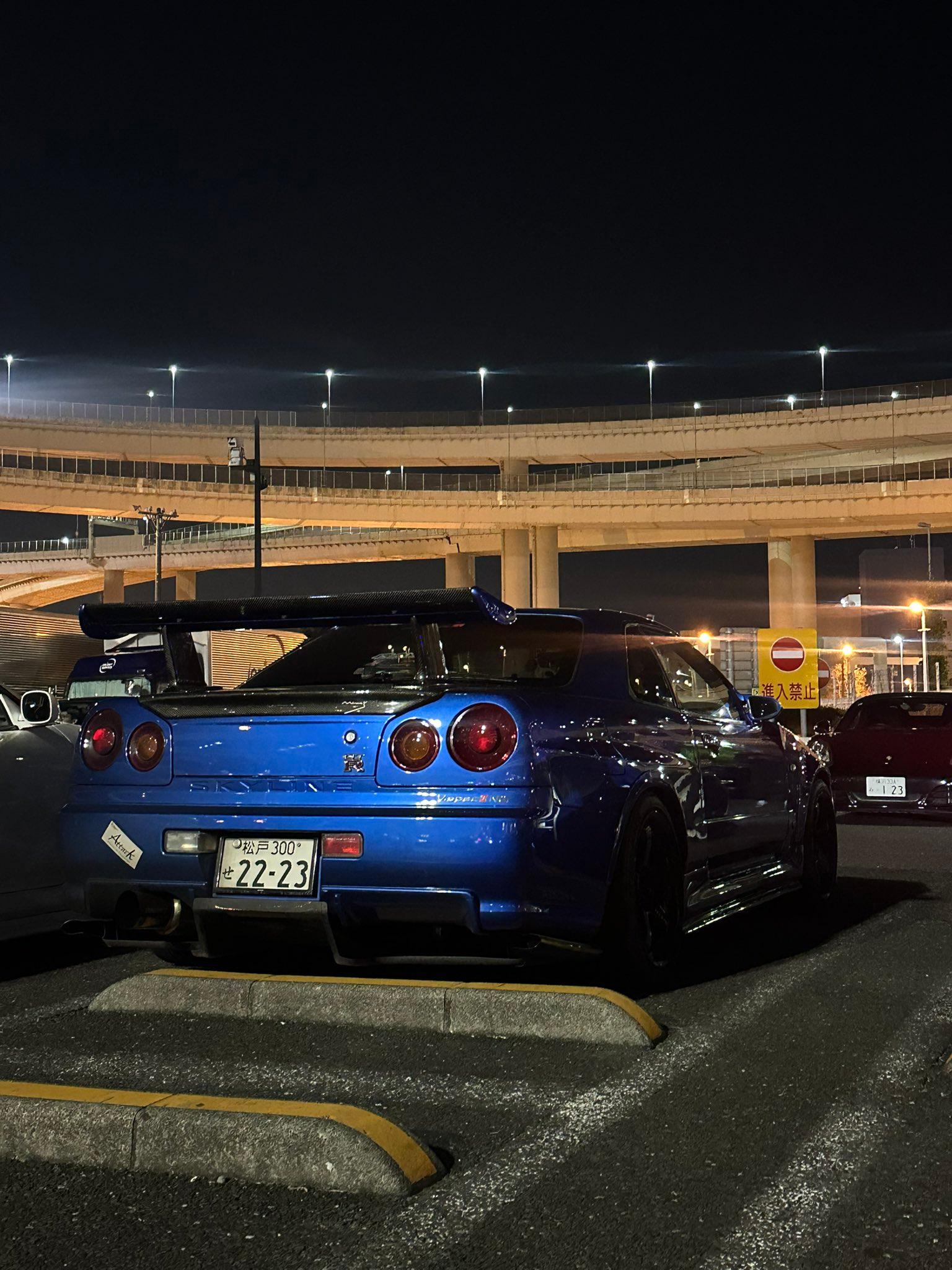
- Daikoku Parking Area, an hour in Japan’s largest informal car gathering — free to enter, and reachable only by car.
- Tokyo Tower, a photo stop on the way back, and the shot most guests actually post.
Daikoku is the one stop nobody controls. It is a working expressway rest area whose entrance gets closed when it fills, often from around 19:00 on Fridays and Saturdays according to operators’ own booking conditions, and its turnout is decided on the night by strangers looking at the weather. Book for the drive; treat a full lot as upside.
So what should you actually book?
- You want the safest, most-reviewed choice? The featured tour. Five thousand reviews is not a rounding error, and the free drop-off at your door in central Tokyo is worth more at 23:00 than it reads on the page.
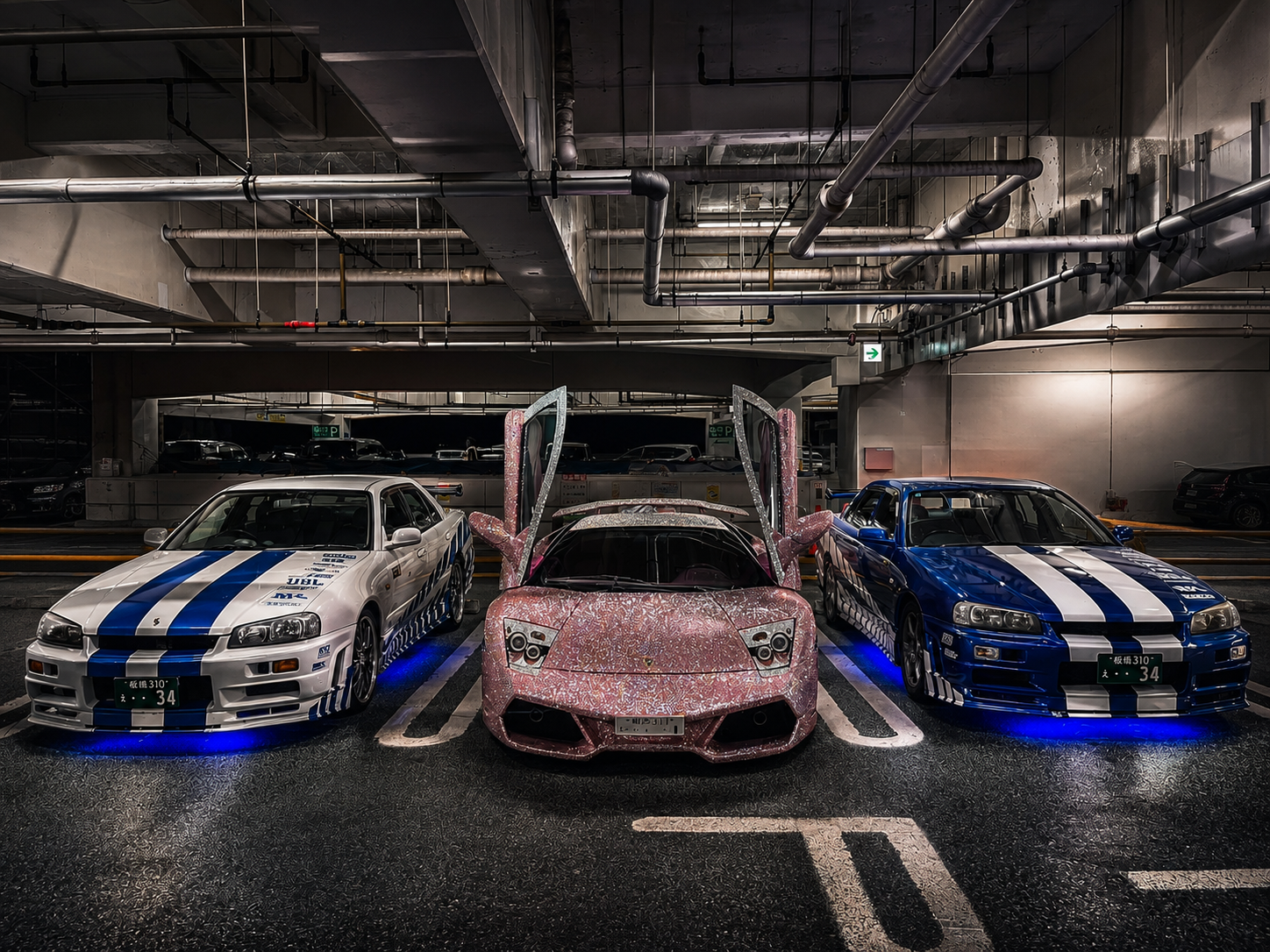
- A specific chassis is the entire point? Do not book a mixed fleet and hope. Pay for a listing that names the car — see the R34 Skyline page, where the car is contractual.
- You want the car’s actual owner driving it? Take the owner-driven option in the comparison. It is the only model where the person at the wheel built the thing.
- Travelling as three or four? Redo the maths before dismissing the private tier. $379 for four is $95 each.
- You are pregnant, have a heart condition, or get motion sick? Read each listing’s restrictions individually — they vary far more across these products than you would expect, and several are specific.
- The film is the reason you are here? Go in with the facts rather than the trailer: what Tokyo Drift actually was, and what a tour can and cannot re-create.
See live dates and prices
We are not affiliated with any manufacturer or studio. This is an independent visitor guide with no affiliation to, endorsement from or connection with Nissan, Toyota, Mazda, Mitsubishi, Subaru, Universal Pictures, Daikoku Parking Area, the Japan Automobile Federation or any of the tour operators named here, and we use no marque, tuner logo or film mark. Tours shown on this page are sold by GetYourGuide, and we earn a commission if you book through our links at no extra cost to you.
How these facts were checked
Written 10 August 2026.
- The chassis counts are ours, computed over the 27 Tokyo products in our own captured dataset by searching each listing’s title, description, highlights and inclusions. They describe how often a car is named on a booking page, not how many exist in Japan.
- Fleet size, the “no company fleet cars” claim, the per-group pricing, the passenger limits, the route timings and every restriction quoted are taken from the operators’ own GetYourGuide listings, captured August 2026.
- Nissan built the BNR34 GT-R from January 1999 to 2002 and the US 25-year import rule means individual cars become importable as each reaches 25 years from its build date, with more qualifying every month into 2027. Both are from motoring press coverage of the 2024 threshold.
- Tokyo Drift’s box office — roughly $159 million worldwide against an $85 million budget, the lowest-grossing entry in the series — and the Vin Diesel / Riddick cameo deal are from published box-office records and franchise reporting.
- The guerrilla filming in Shibuya, the stand-in who was detained, and the heavy use of visual effects for the crossing sequence are from production reporting on the film. Real Tokyo locations used include Takeshita Street, Kabukichō and a rooftop pitch above Shibuya.
- The IDP rules — 1949 Geneva only, 1968 Vienna refused, the six-country translation list (Switzerland, Germany, France, Belgium, Monaco, Taiwan), the ¥6,000 fee, two-to-three-day processing and one-year-from-entry validity — are from JAF’s own English-language pages, current to its April 2026 edition. Older guides listing seven or eight countries are out of date; Slovenia was removed and Italy was never on it.
- Shaken — first inspection three years after registration then every two years, with 2026 statutory fees of roughly ¥44,000–45,000 for a 1.0–1.5 tonne car — is from Japan’s motor-vehicle inspection rules and current fee schedules.
- The Daikoku closure timings are two operators’ own published booking conditions. No official closure schedule exists, so the ~19:00 figure is the trade’s working assumption and we have not dressed it up as a rule.
- Prices, ratings, review counts and reviewer quotes are the booking platform’s own, captured August 2026, and move over time.
- What we could not verify: the horsepower figures several listings quote for their own cars. They are operator claims about their own vehicles and we have not repeated them as fact.